Top Stories
Mining
CSOs speak out on radioactivity risk of Kangankunde monazite
July 17, 2026 / Marcel Chimwala
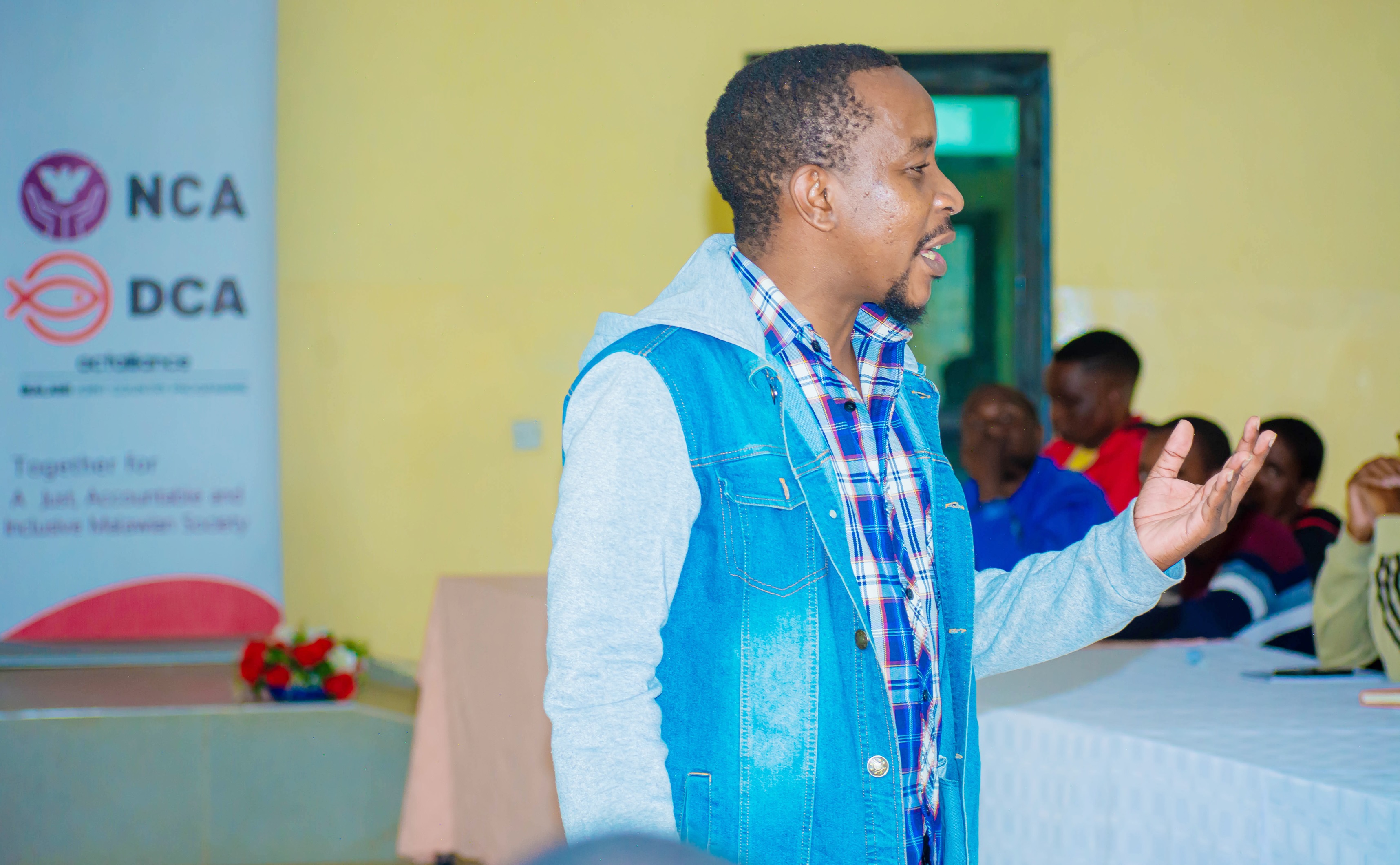
Civil Society groups working in Malawi’s mineral sector under the umbrella of the Natural Resources Justice Network (NRJN) say there is need for the Malawi Government to initiate independent investigations and baseline radiation assessment studies around the Kangankunde project area in Balaka before full-scale operations commence.
Australian-listed Lindian Resources is preparing to start monazite mining at Kangankunde in the fourth quarter of this year, and is currently finalizing the construction of the mine and relevant infrastructure.
But Coordinator for Natural Resources Justice Network (NRJN) Kennedy Rashid says in an interview that NRJN has reviewed the Kangankunde Rare Earths Project Feasibility Study released by Lindian Resources in July 2024 but while the report presents the project as economically attractive and describes the radioactive content as “low,” NRJN believes the issue of radioactivity requires deeper public scrutiny, independent scientific verification, and stronger regulatory oversight by the Government of Malawi.
Rshid says: “The feasibility study confirms the presence of thorium and uranium within the Kangankunde ore body and concentrates. The company indicates estimated thorium concentrations of approximately 50ppm and uranium concentrations between 5ppm and 6ppm, while also stating that the product is classified as non-radioactive for transport purposes. However, NRJN maintains that transport classification alone should not be treated as sufficient assurance regarding long-term environmental and public health safety.”
“Rare earth mining globally has demonstrated that even relatively low concentrations of naturally occurring radioactive materials can become significant over time through accumulation in tailings storage facilities, dust emissions, wastewater discharge, occupational exposure, and long-term waste handling. The Kangankunde project is projected to operate for approximately 45 years, with large-scale extraction, processing, tailings generation, and concentrate transportation planned over decades.”
NRJN, therefore, believes there is a compelling public interest justification for the Government of Malawi to initiate independent investigations and baseline radiation assessments around the Kangankunde project area before full-scale operations commence. These investigations should not rely exclusively on company-generated data, but should involve independent scientists, environmental regulators, health experts, universities, civil society organisations, and where necessary, international radiation safety institutions.”
He explains that particular attention should be given to: Long-term radiation exposure risks for surrounding communities and mine workers; Safety and management of tailings storage facilities over the lifespan of the mine; Potential contamination of groundwater, rivers, agricultural land, and food systems; Airborne radioactive dust risks during mining, transportation, and processing; Institutional preparedness and monitoring capacity of Malawi’s regulatory agencies; and Emergency response systems and long-term mine closure liabilities.
NRJN also notes that while the company states that an Environmental and Social Impact Assessment (ESIA) was approved by the Malawi Government, transparency around radiation-specific studies, public disclosure of baseline data, and independent peer review remains limited in the public domain.
“Communities and the general public deserve access to understandable and independently verified information regarding potential environmental and health implications associated with the project,” says Rashid.
But NRJN cautions against unnecessary panic or misinformation saying the existence of thorium does not automatically mean there is immediate danger to communities.
“However, responsible governance requires precaution, transparency, scientific independence, and continuous monitoring, especially in strategic mineral projects associated with rare earth extraction,” says Rashid.
He says as Malawi positions itself within the global critical minerals and energy transition economy, NRJN believes the country must avoid repeating mistakes observed in other mining jurisdictions where environmental and health concerns were addressed only after serious damage had already occurred.
“Economic benefits should never come at the expense of public health, environmental integrity, and community safety.”
“NRJN therefore calls upon the Government of Malawi to establish an independent and transparent radiation monitoring and oversight framework for rare earth mining projects, including Kangankunde, to ensure that mining development proceeds in a manner that protects both present and future generations.”
Lindian is, currently, finalizing construction of the mine and relevant infrastructure at Kangankunde, with concentrate planned to be exported to Kazakhstan for downstream processing.
Share this:
Leave a Comment
Comments
Mining & Trade Review News

Agribusiness News

Subscribe to Newsletter
Rehabilitation:
The establishment of a stable and self-sustaining ecosystem, but not necessarily the one that existed before mining began. In many cases, complete restoration may be impossible, but successful remediation, reclamation, and rehabilitation can result in the timely establishment of a functional ecosystem.
Archives
Remediation:
The cleanup of the contaminated area to safe levels by removing or isolating contaminants. At mine sites, remediation often consists of isolating contaminated material in pre-existing tailings storage facilities, capping tailings and waste rock stockpiles with clean topsoil, and collecting and treating any contaminated mine water if necessary.
Stakeholders Logos